Protein is one of the most talked-about nutrients in fitness and nutrition—and for good reason.
It plays a major role in muscle repair, recovery, strength, and overall health. But many people struggle with two common questions:
- How much protein do I actually need?
- What does that look like without weighing my food?
Let’s break it down in a practical way.
How Much Protein Do You Need?
The Recommended Dietary Allowance (RDA) for protein is:0.8 grams of protein per kilogram of body weight per day.
This amount is considered the minimum required to prevent deficiency, not necessarily the optimal amount for people who exercise regularly.
Research suggests physically active adults may benefit from:1.2 – 2.0 grams of protein per kilogram of body weight per day (Thomas, Erdman & Burke, Journal of the Academy of Nutrition and Dietetics, 2016)
Example
150 lb person (68 kg)
- Minimum intake: ≈ 55 g per day
- Active lifestyle range: ≈ 80–135 g per day
For many active adults, a practical target is often around:90–120 grams of protein per day
You Don’t Need to Weigh Your Food
A common misconception is that you need to weigh every gram of food to reach your protein intake goals. In reality, using visual portion sizes works very well.
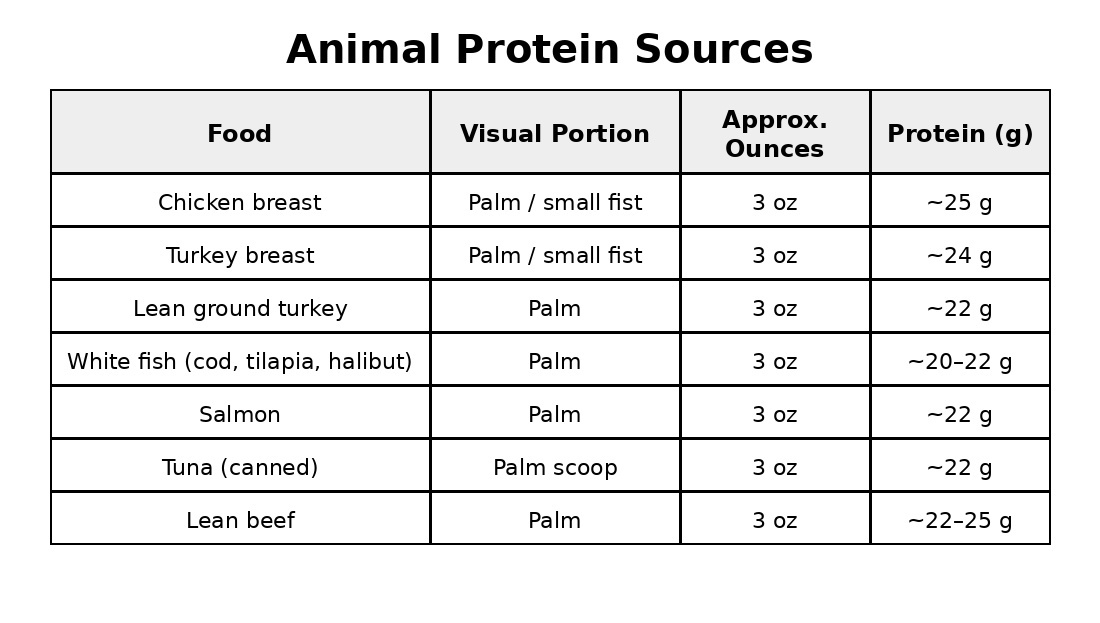
A simple rule of thumb:A palm-size portion of lean protein (about 3 oz) usually contains 20–30 grams of protein. If you include a protein source at each meal, it becomes much easier to reach your daily intake.
Example structure:
- Breakfast: 20–30 g
- Lunch: 25–35 g
- Dinner: 25–35 g
- Snack: 10–20 g
Protein Portion Guide
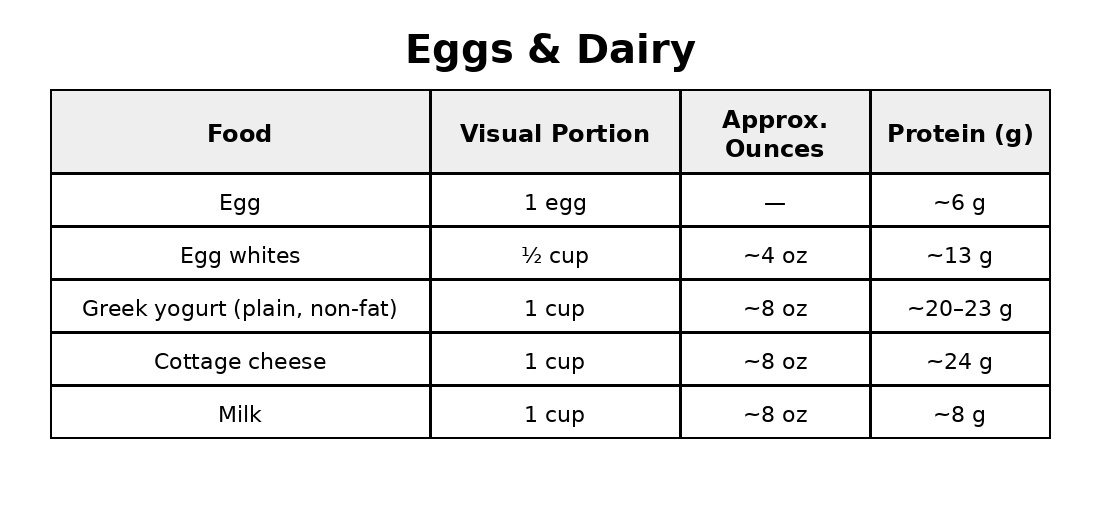
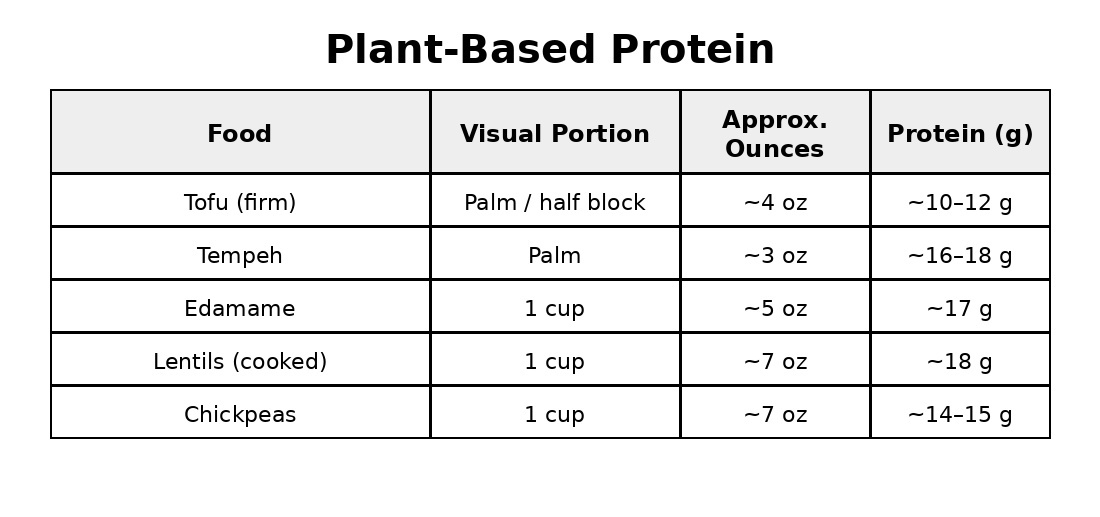
Below are examples of common foods and how to estimate protein without needing a food scale.
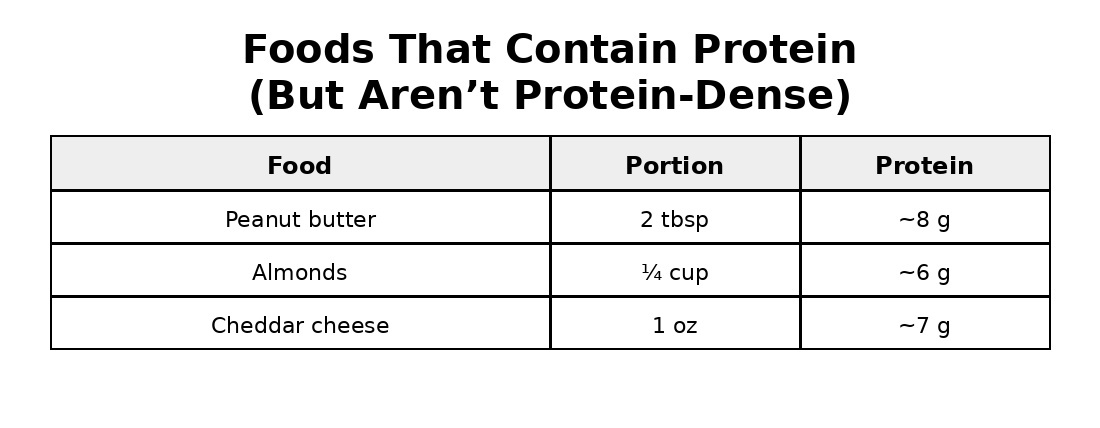
Foods like peanut butter and cheese are often labeled as high protein foods. While they do contain protein, they also contain higher amounts of fat, which means they are not as protein-dense compared to leaner protein sources.
That doesn’t mean these foods are bad.There is no such thing as “good” or “bad” foods. Nutrition is about context and goals.Peanut butter, cheese, and nuts can absolutely be part of a balanced diet. They simply contribute protein differently compared to foods that are more protein-focused.
A Practical Strategy for Getting Enough Protein
Rather than tracking every gram, a helpful strategy is to build meals around a protein source first.
Then add:
- vegetables
- carbohydrates (rice, potatoes, fruit, etc.)
- fats depending on preference
This simple approach naturally helps most people reach their protein intake goals without complicated tracking.
Example Day of Protein Intake
- Breakfast:Greek yogurt + fruit ≈ 20 g protein
- Lunch: Palm-size chicken breast salad ≈ 25 g protein
- Dinner: Salmon with vegetables and rice ≈ 22 g protein
- Snack: Eggs or cottage cheese ≈ 10–20 g protein
Total: ≈ 80–100+ grams of protein
The Takeaway
- Protein plays an important role in:muscle recovery, maintaining strength, energy levels, and overall health.
- For many active adults, a helpful target is roughly:1.2–2.0 g/kg of body weight per day. Which often works out to around:90–120 grams of protein daily
- The easiest way to get there is simply to include a protein source at each meal and use visual portion sizes rather than obsessing over precise measurements.
- And remember: nutrition isn’t about labeling foods as good or bad. It’s about choosing foods that support your lifestyle, activity level, and goals.